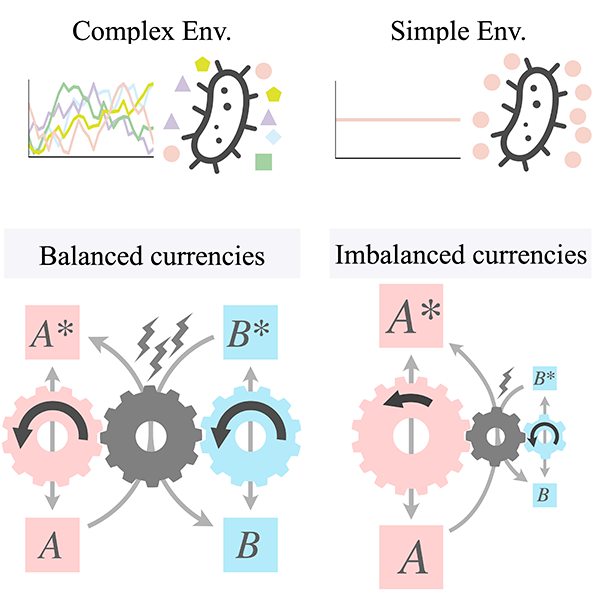
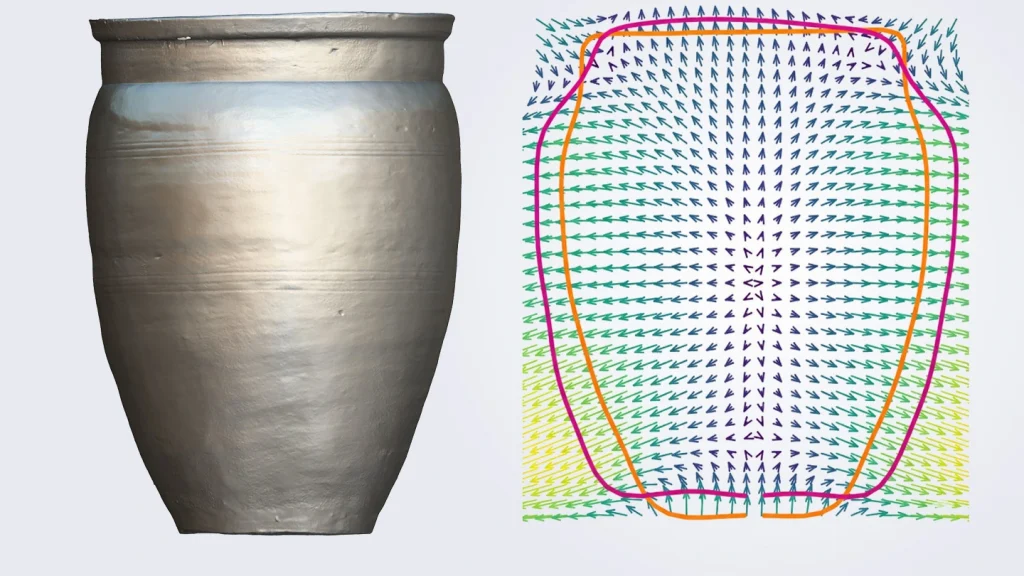
Assuming that society is undergoing a phase transition like matter, what happens at its boiling or melting point? Are there triggers or signs before a social phase transition occurs? In this study, we will use mathematical models based on examples such as responses to global crises and the spread of innovations to elucidate social phase transitions.
About Us
Who we are
We have gathered from the Earth-Life Science Institute (ELSI), the Center for Well-being Research Advancement (CWRA), and the Future of Humanity Research Center (FHRC) at the Institute of Science Tokyo to promote a genuine integration of the humanities and the sciences within the Institute of Future Science. Describing societal change from multiple angles requires a diverse convergence of knowledge. This includes archaeology and history to understand the past, public health, environmental studies, and sociology to analyze and intervene in current global challenges, as well as physics and evolutionary theory to formulate theoretical frameworks. By fostering an organic intersection of these distinct fields, we have established a robust research infrastructure designed not merely for conventional interdisciplinary study, but to unravel the fundamental mechanisms of societal transformation.
What we do
Just as physical systems exhibit distinctive behaviors near a phase transition point, we hypothesize that society also displays unique dynamics in the vicinity of dramatic shifts such as sudden waves of innovation. Based on this hypothesis, we are building a descriptive theory of societal change by drawing upon statistical physics and evolutionary theory. We achieve this by quantitatively analyzing past societal transformations and continuously monitoring present-day social data. By accurately capturing the early warning signals of these shifts, we aim to predict societal “phase transitions.” Ultimately, our goal is to establish methods to steer society toward a better future, utilizing these insights to effectively navigate global crises and catalyze the diffusion of innovation.
Who we work with
Our inquiry is supported by strong collaborations across various departments within the Institute of Science Tokyo, as well as an extensive domestic and international network. Within Japan, we work closely with research institutions such as the Universal Biology Institute (UBI) and the Research Institute of Planetary Health (RIPH) at the University of Tokyo, the Frontier Research Institute for Interdisciplinary Sciences at Tohoku University, and the National Museum of Nature and Science. Internationally, we have built cooperative frameworks with world-leading research centers including the Niels Bohr Institute at the University of Copenhagen in Denmark, and both the National Centre for Biological Sciences (NCBS) and the International Centre for Theoretical Sciences (ICTS) in India. Through joint research with partners possessing diverse expertise across the globe, we are tackling the underlying dynamics of social phase transitions from a truly global perspective.






 2026.09.09
 2026.09.03
 2026.01.22